
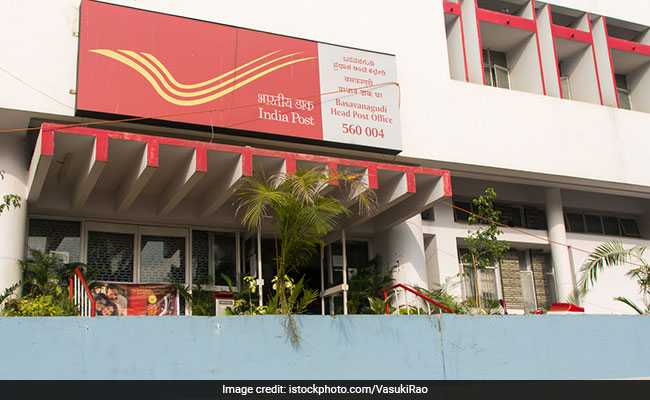
India Post Payments Bank : Easy, affordable and trustworthy banking

R. Viswesvaran | Managing Director & CEO | India Post Payments Bank
An Interview with R. Viswesvaran
Managing Director & CEO | India Post Payments Bank
What is the objective of IPPB and why was it established?
IPPB was created with a simple but powerful purpose: to take formal banking to every household in India, especially those who had remained outside the financial system. The idea was to use the vast reach and deep community connects of the postal network to make banking easy, affordable and trustworthy. With more than 1.65 lakh Post Offices and a postman who knows every home, the government saw a unique opportunity to deliver modern banking literally at people’s doorsteps. Whether it’s savings, DBT transfers or digital payments, IPPB was set up to turn the postal network into a true banking network for the people and make financial inclusion a lived reality across the country.
What is the vision & mission of IPPB?
Our vision is to become the most accessible, affordable and trusted bank for the common citizen. We want every household, regardless of where they live or what they earn, to confidently use modern financial services. Our mission is to remove the barriers that have traditionally kept people away from banking—by simplifying access, reducing costs and leveraging the unparalleled reach of India Post. In short, we aim to make banking transparent, easy and genuinely inclusive.
How do you view IPPB’s progress since inception?
IPPB has come a long way since 2018. What sets us apart is how we’ve combined the scale of the postal network with simple, intuitive digital banking to reach customers right at their doorstep. This model has transformed financial inclusion, especially in rural and underserved regions. By March 2025, we had on boarded nearly 11.67 crore customers, placing IPPB among the world’s largest inclusion initiatives. Our financial journey has also been encouraging, with three consecutive years of full-year profitability and revenues crossing ₹ 2,000 crore in FY 2024–25.
Digitally, we’ve enabled millions to adopt secure, paperless banking through AePS, face-authentication, digital savings accounts, virtual debit cards and eNACH. Most importantly, we’ve remained true to our purpose of serving the unbanked and underbanked, ensuring that modern banking reaches those who need it the most.
What is the exact role of IPPB in the banking sector?
IPPB plays a very distinct role by focusing on the last mile. Instead of expecting customers to reach a branch, we take banking to their homes through Postmen and Gramin Dak Sevaks. From deposits and withdrawals to remittances, bill payments and insurance, we make essential services accessible where they are needed most. We are also a trusted gateway for DBT and Aadhaar-enabled services, which has made financial access seamless for millions who earlier struggled with distance, documentation or digital literacy.
How satisfied are customers with IPPB’s services?
Customer satisfaction has been very encouraging, and the clearest indicator is the way people continue to adopt and use our services. This year alone, our customer base grew 32% and deposits surged 67%, which reflects deep trust. We’re also seeing strong digital uptake, with an 88% jump in digital transactions and a 41% rise in mobile app usage. These trends show that customers find our doorstep and digital banking reliable, convenient and easy to use. Even as we grow, we remain focused on continuously improving our platforms, enriching products and strengthening the capability of our frontline postal staff.
How would you rate the quality of services IPPB offers?
I would say the quality of our services is strong and improving steadily. What makes IPPB special is the combination of accessibility, simplicity and trust that comes from the postal network. With over 1.65 lakh touch points and a workforce familiar to every community, we offer reliability at a scale no other bank can match. At the same time, we’ve been enhancing product quality—whether through new savings offerings, inclusive features like face-authentication, or our ability to support government programmes at the last mile. Digital strengthening remains an ongoing effort, but overall, the experience we provide is robust, customer-focused and evolving with the needs of those we serve.
What improvements can IPPB make to its services?
There is always room to do better, especially in an organisation that operates at India’s last mile. Strengthening digital reliability is a key priority—smoother app performance and better support for low-connectivity areas will make a real difference. We are also working to simplify operations for Postmen and GDS by moving toward integrated devices and more intuitive customer interfaces.
Another important area is people capability. Our postal workforce is the face of IPPB, and continuous training helps them evolve from service providers to trusted financial guides for rural customers. Financial literacy at the grassroots is equally essential. With these improvements, we aim to make our services not just accessible, but consistently seamless and dependable.
Are there any additional services IPPB wants to offer?
Yes, we are continuously expanding to meet the needs of last-mile customers. A major focus is on scaling Dak-Pay into a comprehensive payments and digital banking platform for households and merchants. We are also enhancing assisted services with innovations like sound box transaction alerts and more intuitive multilingual interfaces. Looking ahead, we want to broaden access to savings, protection and eventually credit—through partnerships or an expanded licensing framework. Our goal is to ensure that every customer, no matter where they live, can access meaningful financial services with ease and confidence.
How has IPPB progressed in digital banking and technology?
Technology is at the heart of IPPB’s model, and our digital progress has been both rapid and transformative. Today, more than 3 lakh Postmen and GDS deliver secure, biometric-enabled banking at the doorstep through CBS-integrated smartphones and Micro-ATMs. This has brought digital finance to villages where no bank branch exists.
We’ve strengthened our digital ecosystem with e-KYC, AEPS, UPI, QR payments, multilingual mobile banking and seamless DBT delivery. These services make us a trusted partner for both customers and government programmes. Our focus remains on using technology to make banking intuitive and inclusive, and we will keep investing in this backbone to serve every village more effectively.
What major challenges is IPPB facing today?
We operate in a unique environment. The Payments Bank framework itself limits our revenue model since we cannot lend and have a ₹2 lakh deposit cap. This means we must build sustainability on transactions and service-based income, which requires scale and efficiency.
The second challenge is the terrain we serve. Rural India still faces patchy connectivity and low digital familiarity, and delivering real-time services in such conditions is demanding. Our postal workforce is transitioning into tech-enabled bankers, which requires continuous training and device support.
How will IPPB reduce exploitation by moneylenders in rural areas?
IPPB is giving rural customers a credible alternative to informal borrowing by bringing them closer to formal, affordable financial services. While we cannot lend directly, we are building a strong credit-enabling ecosystem through partnerships with NBFCs, MFIs and other institutions. Our role is to handle last-mile access, digital KYC and doorstep support so that customers can access fair and transparent credit instead of depending on moneylenders.
Equally important is awareness. Our Postmen and GDS play a big role in guiding customers on safe banking practices, government schemes and responsible financial behaviour. As financial literacy grows, dependence on exploitative channels naturally reduces.
Please say something about your principal target – “Banking @ Doorstep.”
“Banking @ Doorstep” is at the heart of our mission. Financial inclusion can’t succeed if people have to travel far or navigate complex systems just to access basic banking. So we took a very different approach: we bring banking to the customer. With more than 3 lakh Postmen and GDS equipped with biometric devices and smartphones, we’ve turned the familiar postal network into India’s largest doorstep banking force.
From opening an account to cash withdrawal, bill payments, remittances or insurance—everything can be done at the customer’s home, in their own language, without disrupting their routine. This model has had a profound impact on the elderly, women, differently abled citizens and rural families for whom banking was once distant or intimidating. Our goal is simple: ensure that no household, however remote, is left outside the financial system.
(Shilpa Bichitra | Special Edition | 2025)
Categories
-
Agriculture & Rural Development11
-
Banking & Insurance4
-
Coal & Mines5
-
Defence & Defence Production5
-
Engineering & Technology3
-
Environment & Pollution1
-
Export & Import1
-
Housing & Urban Development1
-
Human Resources & CSR Initiatives2
-
Iron & Steel3
-
Logistic & Warehousing2
-
Micro, Small & Medium Enterprise3
-
Petroleum & Natural Gas8
-
Post & Telecommunication3
-
Power & Energy4
-
Tourism & Leisure2